
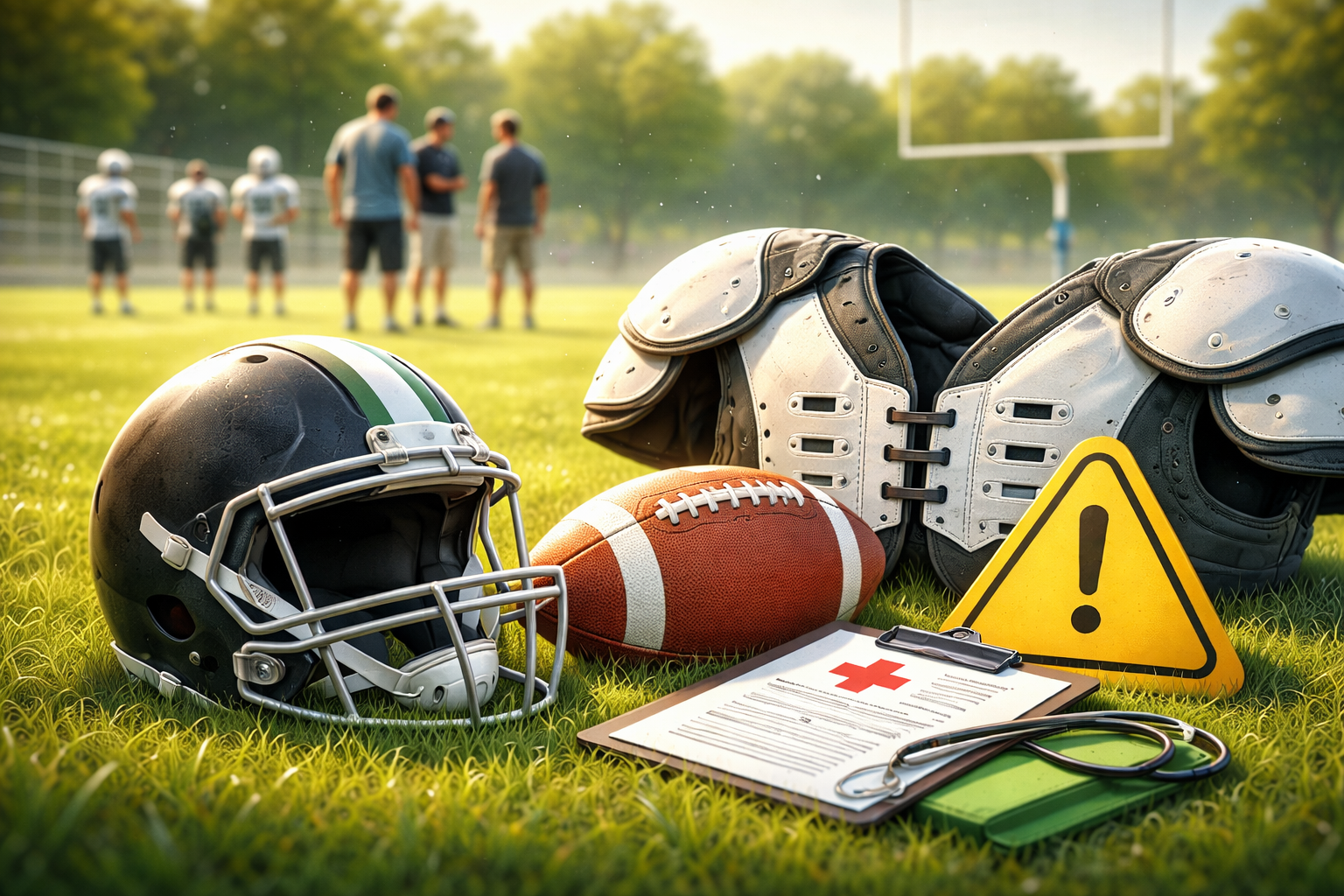
With fall around the corner, youth football practices and games will soon be in full swing. Football provides great opportunities for teamwork, exercise, and fun — but it also carries a risk of head injuries, including concussions. As pediatricians, we want you to be informed and prepared so you can protect your child’s health while they enjoy the game.
What Is a Concussion?
A concussion is a type of brain injury caused by a blow to the head or forces that shake the brain inside the skull. It doesn’t always involve loss of consciousness — many concussions happen without a child “passing out.” Kids’ brains are still developing, so even seemingly minor hits can be serious.
Common Signs and Symptoms to Watch For
Concussion symptoms can be physical, cognitive, emotional, or related to sleep. They may appear immediately — or up to 48 hours later.
Physical signs:
- Headache or pressure in the head
- Nausea or vomiting
- Balance problems or dizziness
- Sensitivity to light or noise
Cognitive and emotional signs:
- Feeling “foggy” or slowed down
- Difficulty concentrating or remembering
- Irritability or sadness
- Sleep changes (too much or too little)
Kids under age 10 may have trouble describing symptoms — watch for behavior changes like irritability, fatigue, or seeming “off” from their usual selves.
What to Do if You Suspect a Concussion
If your child takes a hit to the head and shows any signs above:
- Remove them from play immediately. They should not return to practice or a game that day.
- Get a medical evaluation. A health care provider experienced in concussion care should assess your child before they return to athletics.
- Monitor closely for 24–48 hours. Symptoms can evolve, so stay alert.
If your child develops severe symptoms — such as repeated vomiting, severe headache, increasing confusion, drowsiness that worsens, unequal pupil size, or weakness — go to the emergency department immediately.
Recovery Is Physical and Mental
Recovery from a concussion isn’t just about resting the body — the brain needs a break too. Activities like homework, video games, screen time, and reading may worsen symptoms early on. Your pediatrician can help guide a “return to learn” and “return to play” plan that’s safe and gradual.
Most kids recover fully within 1–2 weeks, but some take longer, especially if they’ve had previous concussions. Repeated injuries can have more lasting effects.
Tips to Keep Football Safer
While concussions can’t be completely prevented in contact sports like football, there are steps that help lower risk and improve safety:
- Ensure helmets and protective gear fit properly and are well maintained.
- Encourage proper tackling and playing technique taught by trained coaches.
- Talk with your child before the season about concussion symptoms and the importance of reporting them.
- Make sure coaches and athletic staff are trained in concussion recognition and protocols. According to recent surveys, a strong majority of parents want this training in youth sports.
Talk Openly With Your Child
Have a conversation about the importance of safety. Use age-appropriate language so your child knows to speak up if they feel something isn’t right. Reinforce that reporting symptoms isn’t “weak” — it’s smart and keeps them healthier in the long run.
As always, if you have questions about your child and concussion risk, or want guidance on return-to-play decisions, talk with your pediatrician — we’re here to help your family have a healthy and happy football season!